
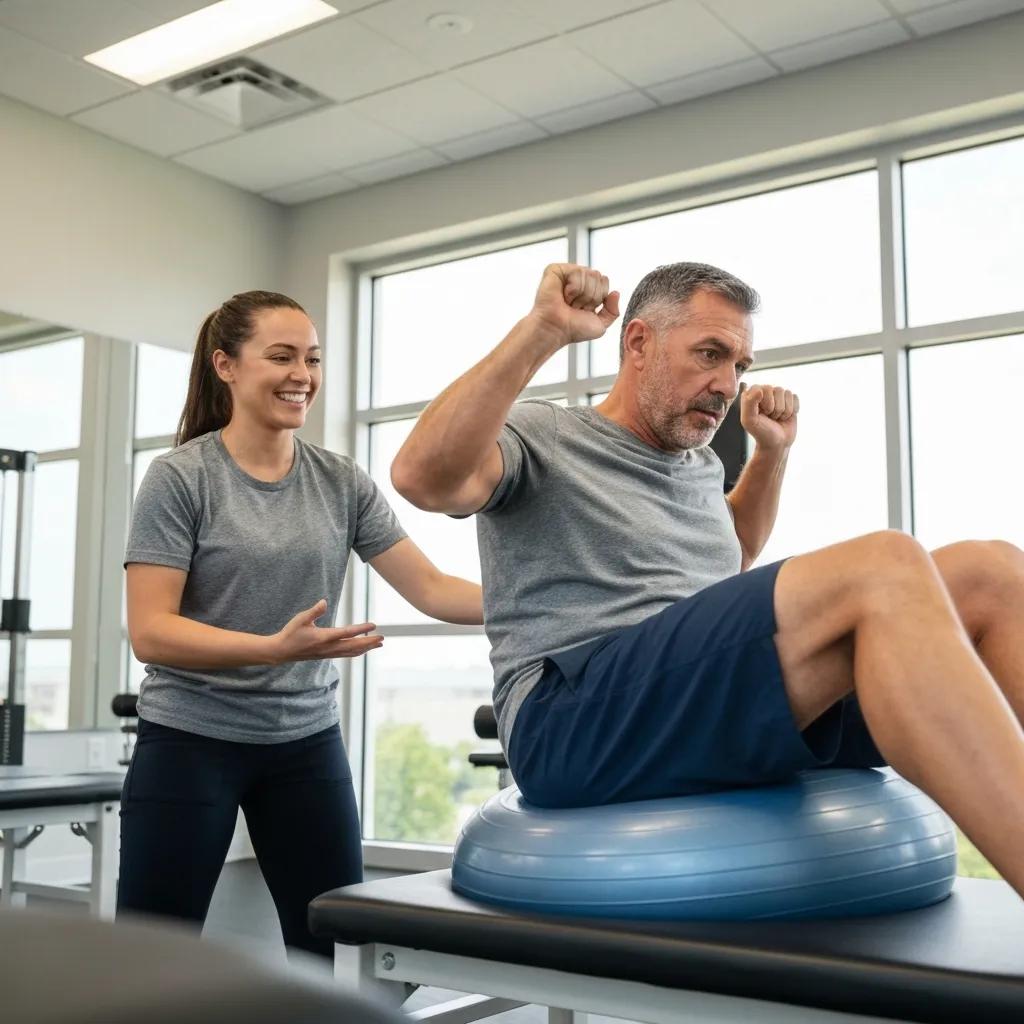
When symptoms linger or worsen after an injury, self-care often isn’t enough. Physical therapy applies movement-focused, evidence-based methods to pinpoint what’s limiting you and to restore function while easing pain. From a Phoenix physical therapist clinic, this guide helps you recognize the clinical signs that warrant a PT evaluation, explains why each sign matters, and gives practical next steps so you can get the right care sooner. You’ll see why persistent pain, reduced mobility, recurring problems, trouble with daily tasks, balance concerns, nerve symptoms, medication dependence, and post-op setbacks commonly lead people to PT. For each sign we outline the clinical reasoning, typical PT strategies, and how earlier, individualized care improves recovery and long-term function.
What are the most common signs that point to physical therapy after an injury?
Below are the most frequent clinical flags that suggest a PT evaluation is appropriate, plus the movement- and load-focused reasons therapists look for them. Early recognition shifts care toward improving movement quality, load tolerance, and neuromuscular control instead of only masking symptoms. Use this quick, scannable list to decide when to seek help and to understand what a therapist will assess.
- Persistent pain that doesn’t improve with rest or basic self-care.
- Stiffness or a limited range of motion that gets in the way of function.
- Muscle weakness or joint instability during everyday activities.
- Recurrent or overuse injuries that don’t fully resolve.
- Difficulty with daily tasks (ADLs) like climbing stairs or rising from a chair.
- Balance problems, dizziness, or a recent fall.
- Post-operative stiffness, swelling, or very slow progress after surgery.
- Numbness, tingling, or pain that travels down an arm or leg.
- Needing pain medication just to get through your day.
- Clear changes in your walk or persistent compensatory movement patterns.
This checklist highlights the clinical signs therapists focus on during an evaluation. Spotting them early helps clinicians target interventions more efficiently and lowers the risk of long-term issues using focused physical therapy for long-term recovery.
Table: Signs, Clinical Presentation, and Why Physical Therapy Helps
This quick mapping links what you feel or see to the PT rationale, helping you decide when an evaluation makes sense. Next, we look closer at persistent pain and mobility loss.
How does persistent pain point to the need for physical therapy?
Persistent pain after an injury often means normal healing has stalled or that compensatory movement patterns keep stressing tissues or sensitizing the nervous system. Pain that lasts longer than expected, won’t settle with rest, or limits your activities suggests altered load management, increased neural sensitivity, or mechanical dysfunction, all issues PTs address. A therapist uses a movement-based exam to separate tissue irritability from central sensitivity and then prescribes graded loading, hands-on techniques, and education to restore pain-free function. At Movement Redefined, our evaluations emphasize movement, progressive exercise, and pragmatic strategies to help Phoenix patients safely increase tolerance to everyday loads.
Why is limited mobility an important reason to see a physical therapist?
Reduced joint range or ongoing stiffness interferes with function and forces other joints to compensate, raising the risk of new injuries. Therapists measure range of motion objectively, pinpoint which tissues limit movement, and use joint mobilization, targeted stretching, soft-tissue treatment, and neuromuscular re-training to restore practical motion. Clinicians at Movement Redefined combine hands-on care with functional exercise so gains in the clinic transfer to safer movement at home and work. This is a necessary step before advancing to higher-level strengthening or return-to-activity progressions.
When should you see a physical therapist for recurring or sports-related injuries?
Recurring issues usually reflect unresolved movement deficits, training-load mistakes, or tissue capacity that’s too low for the demands placed on it, not just an isolated flare. A timely PT exam finds movement-control deficits, strength imbalances, or load-progression errors and prescribes corrective exercises with a structured return-to-activity plan. For athletes, early assessment targets sport-specific demands, movement screens, and graded exposure to intensity to reduce the risk of chronic recurrence. Use the short checklist below to decide when to pursue sports-focused PT.
- When to seek sports PT: repeated pain with the same movements, decreasing performance, or repeatedly needing to “rest” the same area.
- Timeline cues: symptoms that persist beyond 1–2 weeks despite rest or that flare when training resumes.
- Prevention cues: recurring tendon pain, repeated ankle sprains, or ongoing shoulder discomfort with overhead activity.
This guidance helps active people prioritize evaluation when self-management isn’t working and prepares them for focused movement screening and load management.
How do recurring injuries indicate the need for specialized physical therapy?
Recurring injuries point to underlying drivers such as faulty movement patterns, timing errors, or inadequate tissue capacity for the task. Physical therapists use movement screens, strength testing, and load-capacity measures to identify those drivers and then build resilience with progressive loading and neuromuscular re-education. Examples include gait analysis for repeated lower-extremity strains or scapular-control programs for recurrent shoulder pain. Movement Redefined’s sports therapy and performance services pair screening with individualized programming so athletes return safely and lower future risk.
What are the benefits of physical therapy for sports injury recovery?
Physical therapy accelerates return by rebuilding tissue capacity, improving movement quality, and using sport-specific progressions that reduce re-injury risk. Structured rehab shortens downtime through early mobility work, staged strength phases, and objective return-to-play testing. Typical benefits include faster timelines back to sport, measurable performance improvements, and fewer recurrences versus an unstructured return. Therapists also teach load management and training adjustments so athletes can maintain performance while protecting long-term health.
How can physical therapy help if you’re struggling with daily activities or weakness?
If an injury makes everyday tasks, like climbing stairs, carrying groceries, or standing up from a chair, difficult, that signals a functional deficit that needs more than symptom relief. PTs assess task-specific strength, balance, and movement strategy, then prescribe progressive, goal-focused interventions to restore independence. Treatments include neuromuscular re-education, progressive resistance training, functional task practice, and ergonomic adjustments to improve safety and efficiency at home and work. Common functional goals therapists target are listed below.
- Sit-to-stand and stair training to rebuild lower-limb power.
- Graded load progressions for safer carrying and lifting.
- Task-specific balance and gait work to boost confidence and efficiency.
These practical approaches turn clinical gains into meaningful improvements in daily life and reduce long-term disability risk.
What does trouble with daily tasks reveal about an injury?
Difficulty with ADLs most often reflects a mix of weakness, pain-limited movement, or poor motor control rather than a single tissue problem. For example, trouble standing up commonly indicates reduced hip and knee extensor strength or mistimed force production. A therapist runs simple functional tests to quantify deficits and prescribes progressive exercises that mimic everyday tasks. Early intervention prevents deconditioning, reduces compensatory patterns, and preserves independence. Home programs and ergonomic advice help transfer clinic gains into real-world function.
How does physical therapy address muscle weakness and instability?
PT treats weakness and instability with a staged progression: start with pain-free activation (often isometrics), advance to concentric and eccentric strengthening, and finally integrate multi-joint, task-specific, or sport-specific loading. Neuromuscular re-education and proprioceptive training refine timing and joint control, while objective tests (for example, single-leg tasks) track improvement. Therapists also teach pacing, load management, and progressive overload so gains stick and reduce the mechanical stresses that drive recurring symptoms.
Research supports neuromuscular training as a key element for improving knee stability, particularly after ACL reconstruction.
Neuromuscular Training for Knee Stability After ACL Reconstruction
This trial looked at how a neuromuscular training program affected knee stability after arthroscopic ACL reconstruction. Sixteen adults completed a targeted training program. Investigators used the Lysholm score to assess knee function and a KT-2000 arthrometer to measure anterior tibial translation. Surface EMG tracked activation changes in the vastus medialis oblique, vastus lateralis, biceps femoris, and semitendinosus before and after training.
What balance, fall, and post-operative signs should prompt physical therapy?

Balance problems, recent falls, or post-op setbacks are strong reasons to pursue rehab because they increase the risk of complications and slow recovery. PTs assess vestibular function, sensory integration, gait, and strength to quantify fall risk and design a tailored plan. Post-op rehab follows phased protocols emphasizing early mobility, swelling control, progressive strengthening, and clear return-to-function milestones. Addressing these issues early reduces long-term disability, shortens recovery, and prevents secondary problems like deconditioning or compensatory injuries.
How do balance problems and fall risk point to the need for physical therapy?
Balance deficits show up as unsteadiness, delayed reactions to perturbations, or actual falls. Objective tests like the Timed Up and Go (TUG) or the Berg Balance Scale (BBS) help quantify risk and guide intervention intensity. PT interventions include vestibular rehabilitation, proprioceptive retraining, and gait re-education to improve both reactive and anticipatory balance. Home-safety education and progressive challenge dosing lower fall risk in everyday settings. Combining objective assessment with targeted retraining helps patients regain confidence for community mobility and independence at home.
When is post-operative physical therapy essential?
Post-op PT is crucial when surgery affects joint motion, strength, or neuromuscular control, common after joint replacements, tendon repairs, or ligament reconstructions. Early phases focus on swelling control, pain management, and safe range of motion; intermediate phases add progressive strengthening and gait normalization; late phases restore work- or sport-specific tasks. Delayed rehab increases the risk of stiffness, poorer final function, and prolonged use of assistive devices. Movement Redefined follows evidence-based timelines and works with surgical teams to guide patients through each recovery stage.
How do numbness, tingling, or reliance on pain meds signal the need for physical therapy?
Sensory symptoms like numbness or radiating pain can indicate nerve compression, neural sensitivity, or central sensitization and demand careful triage. Relying on pain medication to function suggests non-drug strategies haven’t been fully pursued. Physical therapy offers multimodal care, manual therapy, therapeutic exercise, education, and graded exposure, to reduce pain and restore function while minimizing medication use. Therapists screen for red flags that need urgent medical referral, then apply focused interventions to ease neural tension, improve mechanics, and teach safer pain-coping strategies.
What does numbness or radiating pain mean for treatment?
Numbness or radiating symptoms often point to nerve-root or peripheral nerve irritation and require a focused exam to rule out serious red flags (for example, progressive weakness or bowel/bladder changes). PTs use neural mobility tests, dermatomal mapping, and provocation maneuvers to localize the problem, then use directional exercises, neural gliding, and load modification to reduce nerve irritation. If findings suggest urgent medical attention, therapists coordinate care; otherwise, conservative PT often reduces radicular symptoms and restores function through progressive desensitization and biomechanical correction.
How can physical therapy reduce dependence on pain medication?
Physical therapy reduces medication reliance by addressing the drivers of pain with non-pharmacologic strategies: graded, progressive exercise to normalize tissue loading; manual therapy to address joint and soft-tissue restrictions; education about pain science and pacing; and functional restoration to replace passive coping. Current clinical guidance recommends PT as a first-line option for many musculoskeletal pains and supports opioid-sparing strategies focused on restoring function. These approaches help patients regain control and reduce the need for ongoing medication.
What are the advantages of starting physical therapy early after an injury?
Starting PT early shortens recovery, reduces pain, and lowers the chance of surgery or chronic disability by addressing dysfunction before maladaptive patterns set in. Early care preserves tissue capacity, prevents deconditioning, and reduces central sensitization through graded activity and education. Evidence shows better outcomes with timely, individualized rehab for many conditions, and early PT often reduces overall healthcare use. The table below summarizes outcomes for early versus delayed PT.
Table: Early vs Delayed Physical Therapy – Outcomes Comparison
This comparison shows how timing affects recovery and supports referring to PT early in the care pathway. Early intervention naturally aligns with individualized, goal-driven planning.
How does early physical therapy speed recovery and reduce pain?
Early PT evaluates load tolerance, restores safe range of motion, and introduces graded strengthening before compensations become entrenched. These steps reduce nociceptive input and prevent disuse atrophy that can prolong recovery. Research links timely rehab to lower pain intensity, quicker return to work or sport, and fewer downstream interventions like injections or surgery for many conditions. Starting movement-focused care early minimizes chronic drivers and delivers faster, more reliable functional gains.
Why is individualized care important for injury recovery?
Individualized care tailors treatment to your specific impairments, goals, and daily demands, whether that’s a physically demanding job or athletic training. The clinical flow is evaluation → personalized plan → measurable goals; this improves adherence, targets the true drivers of dysfunction, and outperforms one-size-fits-all protocols. Movement Redefined emphasizes outcome-driven, patient-centered plans delivered by experienced clinicians, including Dr. Ben Barrantes, Kenny Love, and Dr. Cori Misner, and accepts many insurance plans to improve access. Schedule an evaluation through our online booking portal or contact the clinic to start a tailored plan.
Recognizing signs early and getting a structured PT evaluation prevents chronic problems and restores function more efficiently.
- Signs to act on now: Persistent pain, loss of function, or recurring injury.
- What PT does first: Movement-based evaluation, clear goals, and graded interventions.
- How to access care: Book an initial evaluation with a qualified clinic for a targeted plan.
These steps connect symptom recognition to concrete treatment paths while keeping the focus on education and recovery.
To learn more about our services or to speak with a specialist, you can easily contact the clinic directly.
Conclusion
Knowing the signs that point to physical therapy matters. Early, targeted care improves recovery and long-term function. By addressing persistent pain, mobility loss, or recurring injuries before compensations become ingrained, you increase the chance of a full, sustainable recovery. Taking the first step is simple: schedule an evaluation with our experienced team to get a personalized plan that fits your goals. Let us help you regain strength, move with confidence, and return to the activities that matter most.