
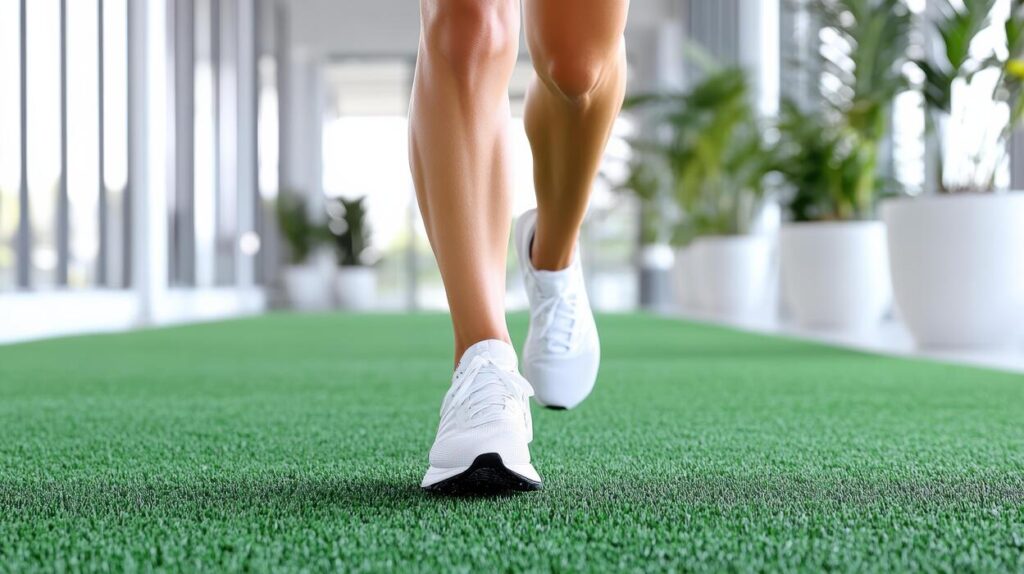
Sports performance training is not just “working out harder.” It’s training with a purpose: Building the specific speed, strength, power, agility, and control your sport demands, while lowering your injury risk along the way. When it’s done well, you feel faster, more stable, and more confident in your body. When it’s done poorly, you may get stronger but still move the same, or you may end up dealing with recurring aches that stall your progress.
If you’re an athlete, a former athlete getting back into sport, or an active adult who wants to move better and perform at a higher level, this guide will help you understand what a smart sports performance program includes, how it differs from generic training, and how to choose the right plan for your goals.
For athletes who want a one-on-one plan that’s built around their sport and their body, start with sports performance training and personal training in Phoenix.
What sports performance training actually means
Sports performance training is a structured approach that targets the physical qualities that drive performance in sport, including:
- Speed And Acceleration
- Strength And Power
- Agility And Change Of Direction
- Mobility And Stability
- Conditioning That Matches Your Sport
- Recovery That Supports Progress
The best programs combine these pieces into a plan that fits your sport, your season, and your current training history.
Whose sports performance training is best for
Performance training is not only for elite athletes. It’s especially effective for:
Athletes who want a competitive edge
If you need quicker first steps, stronger cuts, better jumping mechanics, or more power without wearing your joints down, performance training is the direct path.
Athletes returning from injury.
A rehab plan gets you back to normal life. A performance plan helps you build the capacity to return to sport demands. That gap is where re-injuries often happen.
Youth and high school athletes are building a foundation
A well-built foundation can improve performance and reduce avoidable overuse issues. The focus should be on technique, consistency, and gradual progression.
Active adults who play recreational sports
Pickleball, basketball, soccer, hiking, lifting, and weekend sports all benefit from stronger movement patterns and better tissue capacity.
The 6 pillars of a smart sports performance program
A “good” plan is not complicated. It’s complete. Here are the pillars that should show up in any high-quality performance program.
1) A real assessment, not guesswork
Before programming, you need clarity. A good assessment looks at:
- Movement Quality Under Control And Under Speed
- Strength Imbalances And Weak Links
- Mobility Restrictions That Change Mechanics
- Stability And Control At Key Joints
- Sport-Specific Demands (Positions, Patterns, Volume)
- Injury History And Current Irritations
The goal is to identify what will move the needle most. Many athletes don’t need more random volume. They need targeted fixes.
2) Strength training that transfers to sport
Strength matters, but only when it supports sports movement. A smart strength plan usually includes:
- Lower-Body Strength For Force Production
- Posterior Chain Strength (Glutes, Hamstrings, Back)
- Single-Leg Strength For Cutting And Deceleration
- Upper-Body Strength That Supports Contact And Control
- Core Strength That Resists Rotation And Supports Power
Strength should be progressed gradually and adjusted based on the season. An in-season plan is usually different than an off-season build phase.
3) Power and speed development, not just conditioning
Power is the ability to produce force quickly. Speed is a skill, not just effort. A performance plan typically includes:
- Acceleration Work (Short Sprints, First-Step Power)
- Top-Speed Exposure When Appropriate
- Jump Training Or Plyometrics Based On Readiness
- Medicine Ball Or Explosive Patterns For Transfer
- Mechanics Coaching (Posture, Arm Drive, Foot Strike)
This is where “training hard” becomes “training smart.” You can’t out-condition poor sprint mechanics.
4) Agility, deceleration, and change of direction
Most sports are not straight-line. Athletes need the ability to stop, cut, and re-accelerate without collapsing into inefficient positions.
Key elements include:
- Deceleration Control (Braking Without Knee Collapse)
- Cutting Mechanics (Hip Drive, Foot Placement, Trunk Control)
- Reactive Drills (Sport-Like Decision Making)
- Lateral Strength And Hip Stability
- Progression From Slow To Fast To Reactive
Injury risk often rises when athletes are strong in a straight line but underprepared for fast deceleration and cutting demands.
5) Mobility and stability that actually support performance
Mobility is useful when it improves mechanics. Stability is useful when it keeps you controlled under load and speed. A smart plan includes:
- Hip Mobility For Stride, Depth, And Cutting
- Ankle Mobility For Squats, Landings, And Change Of Direction
- Thoracic Mobility For Rotation, Overhead Mechanics, And Posture
- Shoulder Stability For Contact Sports And Overhead Sports
- Core Control That Resists Unwanted Movement
This is not endless stretching. It’s targeted prep that supports your training and your sport.
6) Recovery and workload management
Recovery is not a “bonus.” It’s part of the program. Without it, progress stalls and aches stack up.
A solid plan includes:
- A Weekly Training Structure That Matches Your Schedule
- Deloads Or Easier Weeks When Needed
- Sleep And Hydration Guidelines That Are Realistic
- Conditioning Dosed To Match The Sport (Not Just Exhaustion)
- Simple Metrics To Track Readiness (Energy, Soreness, Next-Day Response)
If you want a clear explanation of why recovery is part of performance, this is a helpful read: Training Smarter, Not Harder: Rest/Recovery Built into Personal Training.
What a week of sports performance training can look like
The best plan depends on your sport, season, and schedule. But here are two simple examples to show how the pieces fit together.
Example: Off-season athlete (3 sessions/week)
- Day 1: Lower-Body Strength + Acceleration + Core
- Day 2: Upper-Body Strength + Agility + Mobility Focus
- Day 3: Power/Plyometrics + Change Of Direction + Conditioning
Example: In-season athlete (2 sessions/week)
- Day 1: Strength Maintenance + Power Exposure + Mobility
- Day 2: Speed Mechanics + Light Strength + Recovery Emphasis
The key is choosing what to emphasize so you improve without overloading your sports practices and games.
Common mistakes that slow progress
If you want better results, avoid these common traps.
Doing random workouts with no progression
Performance improves when training progresses. That means planned increases in load, speed, complexity, or volume.
Skipping deceleration work
Athletes often sprint and jump but do not train braking. Braking capacity is a major limiter for cutting and injury resilience.
Pushing conditioning when you need strength or mechanics
If you feel “fit” but still get beaten to the ball or feel unstable when you cut, conditioning is not your main bottleneck.
Training through pain and hoping it resolves
Aches don’t always mean stop, but persistent pain is a signal. The plan should adapt early before a small issue becomes a bigger issue.
How to choose the right sports performance program in Phoenix
When you’re comparing options, look for:
- A Clear Assessment Process
- Coaching On Mechanics, Not Just Counting Reps
- Progressions That Match Your Season And Sport
- One-On-One Or Small Format That Allows Real Feedback
- A Plan That Includes Recovery And Workload Management
You should leave sessions knowing what you are building and why. Performance training should feel purposeful, not random.
FAQs about sports performance training
What’s the difference between sports performance training and regular personal training?
Personal training can be general fitness-focused. Sports performance training is built around your sport demands, your season, and the qualities that directly improve speed, power, agility, and durability for competition.
How soon will I notice results?
Many athletes feel improvements in movement quality and confidence within a few weeks. Bigger changes in speed, power, and strength usually build over consistent training blocks. The timeline depends on training history, frequency, and recovery.
Is sports performance training safe for youth athletes?
Yes, when it’s coached properly. The focus should be technique, control, and gradual progression. A well-structured program can build a strong foundation and reduce avoidable overuse issues.
Do I need to be pain-free before starting performance training?
Not always, but pain should guide the plan. Many athletes can train around minor irritations while addressing the driver. If pain is persistent or worsening, it’s important to get assessed so training supports recovery instead of fighting it.
How many sessions per week do I need?
Two sessions per week can work well for many athletes, especially in-season. Three sessions per week are common in the off-season for faster improvements. The best answer depends on your sports schedule and recovery capacity.
Conclusion
Sports performance training is most effective when tailored to your specific sport, season, and body, rather than generic workouts. A smart program develops strength, speed, power, and agility while improving mechanics, workload management, and recovery so you can perform better and stay resilient.
If you want a clear plan that fits your goals and schedule, reach out through the Contact Us page, and Movement Redefined can help you map out the right training approach and next steps.