
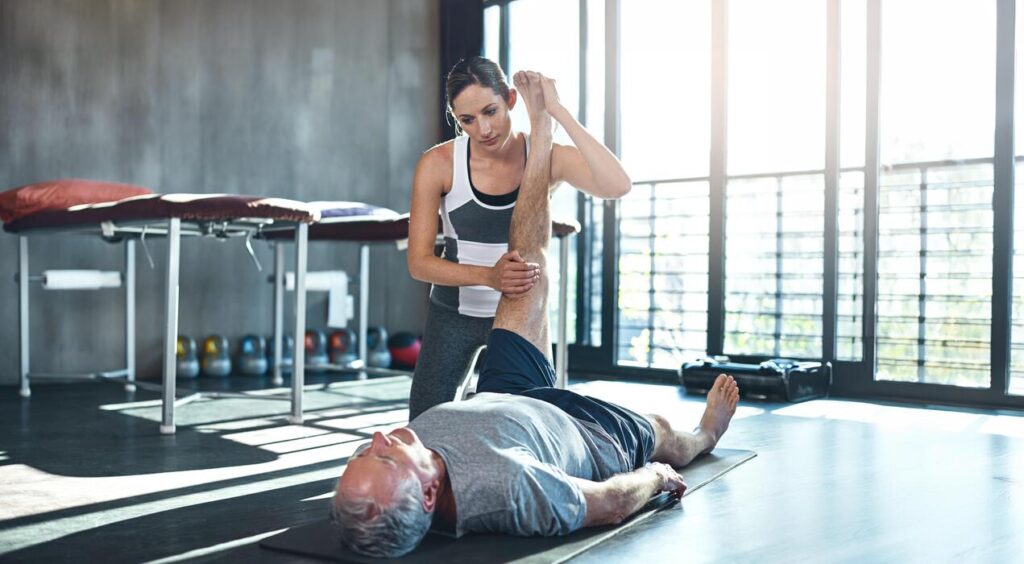
Quick Answer: “You may need physical therapy if pain, injury, surgery, weakness, or movement limitations are affecting daily life or activity. Personal training is usually better when you are pain-free and want to build strength, fitness, or performance. If you are unsure, start with an assessment so the right plan comes first.”
Choosing between physical therapy and personal training can be confusing because both can help you move better. The difference is the starting point. Physical therapy usually begins with a problem that needs evaluation, such as pain, injury, surgery recovery, limited mobility, or weakness. Personal training usually begins with a goal, such as getting stronger, improving fitness, building confidence in the gym, or performing better in sport.
If pain or injury is part of the picture, physical therapy in Phoenix is usually the safer first step because the plan can address the cause of the issue before you build more load on top of it.
What is the main difference between physical therapy and personal training?
The main difference is that physical therapy focuses on treating pain, injury, movement limitations, and recovery, while personal training focuses on fitness, strength, performance, and long-term conditioning.
Physical therapy is more clinical. It looks at symptoms, movement quality, tissue tolerance, strength deficits, mobility limitations, and the reason you are having trouble moving comfortably. Personal training is more fitness and performance-based. It helps you build capacity once your body is ready for more structured exercise.
Both can be valuable. The key is choosing the right one at the right time.
When should you choose physical therapy first?
You should choose physical therapy first when pain, injury, surgery, or movement limitations are affecting how you move. PT helps identify what is causing the issue and gives you a structured plan to improve it safely.
Physical therapy is usually the better first step when:
- Pain Limits Daily Activities Like Walking, Stairs, Sitting, Lifting, Or Reaching
- You Recently Had Surgery And Need A Guided Recovery Plan
- You Have A Sports Injury That Keeps Coming Back
- You Feel Weakness, Instability, Or Loss Of Confidence In A Joint
- You Have Pain That Worsens When You Exercise
- You Are Changing How You Move To Avoid Discomfort
- You Tried Rest, Stretching, Or General Exercise, But The Problem Returned
For example, if your knee hurts every time you run, a personal trainer might help you get stronger, but physical therapy can first identify whether the issue is related to hip strength, ankle mobility, running load, knee mechanics, or tissue sensitivity.
That matters because the wrong exercise at the wrong time can keep the problem going.
When is personal training the better choice?
Personal training is usually the better choice when you are not dealing with active pain or injury and want help building strength, fitness, confidence, or sport performance.
Personal training makes sense when:
- You Want To Build Strength Safely
- You Need More Structure And Accountability
- You Want Better Workout Technique
- You Are Returning To Fitness After A Long Break
- You Want To Improve Athletic Performance
- You Want A Plan That Matches Your Goals And Schedule
- You Feel Unsure What Exercises To Do On Your Own
A good personal training program should not be random workouts. It should include progression, proper technique, strength work, conditioning, recovery, and adjustments based on how your body responds.
If your goal is to train harder, move better, or build performance without guessing, personal training can be a smart next step.
How do you know if pain means you need PT instead of a trainer?
Pain does not always mean something serious, but pain that changes how you move is a strong sign you should start with physical therapy. PT is designed to figure out why the pain is happening and how to load the body safely while it improves.
You may need PT instead of personal training if:
- Pain Is Sharp, Increasing, Or Repeating In The Same Area
- Pain Shows Up Every Time You Try A Certain Exercise
- You Feel Unstable, Weak, Or Guarded
- Pain Lasts Into The Next Day After Activity
- You Have Numbness, Tingling, Or Radiating Symptoms
- You Are Avoiding Movements Because You Do Not Trust Your Body
A trainer can help with general strength, but a physical therapist can assess pain, movement limitations, injury history, and recovery needs more directly.
How do physical therapy and personal training compare?
Here is a simple way to compare the two options.
| Situation | Physical Therapy | Personal Training |
| You have pain during daily activities | Best first step | Not usually the first choice |
| You are recovering after surgery | Best first step | Later phase, when cleared |
| You want to build strength | Helpful if pain or limitations exist | Great choice if pain-free |
| You want a better workout structure | Helpful if movement issues exist | Great fit |
| You keep getting injured | Best first step | Helpful after the issue is addressed |
| You want sports performance training | Useful after injury or pain | Great fit for performance goals |
| You are unsure what is safe | Best first step | Good after assessment or clearance |
The best choice depends on your current body, not just your goal. If your body is irritated, stiff, weak, or painful, PT can build the foundation. Once that foundation is solid, personal training can help you build strength and performance on top of it.
Can physical therapy and personal training work together?
Yes. Physical therapy and personal training often work best as a sequence. PT helps reduce pain, restore movement, and rebuild function. Personal training helps you keep progressing once you are ready for higher-level strength, conditioning, or performance work.
A common path looks like this:
- Physical Therapy First: Reduce pain, improve mobility, restore strength, and rebuild confidence
- Transition Phase: Add more strength, endurance, and sport-specific movement
- Personal Training Next: Build long-term strength, fitness, and performance
This is especially useful for people who do not want to only “feel better.” They want to move better, train harder, and avoid returning to the same problem.
For a deeper look at how training can support long-term progress, read One-on-One Fitness Training: Why Personal Training Works.
What if you are active but keep getting small injuries?
If you are active but keep getting small injuries, physical therapy is usually the better first step. Recurring injuries often mean there is a movement, strength, mobility, recovery, or workload issue that needs to be addressed.
For example:
- Runners May Need Hip, Calf, Or Foot Strength Work
- Golfers May Need Trunk Rotation And Shoulder Control
- Pickleball Players May Need Elbow, Shoulder, Or Hip Stability
- Lifters May Need Technique Adjustments And Load Management
- Hikers May Need Ankle Balance And Downhill Control
Personal training may help later, but if the same pain keeps showing up, the first job is figuring out why.
What if you are pain-free but feel weak or out of shape?
If you are pain-free but feel weak, deconditioned, or unsure how to train, personal training is often the right choice. You do not need to wait until you are injured to get professional help.
Personal training can help you:
- Build Strength With Better Technique
- Improve Balance And Coordination
- Increase Confidence In The Gym
- Develop A Realistic Weekly Plan
- Progress Without Doing Too Much Too Soon
- Stay Consistent With Accountability
This can be especially helpful if you have tried starting a routine before but struggled to stay consistent or know what to do next.
What should you choose if you are returning after an injury?
If you are returning after an injury, physical therapy usually comes first, then personal training may follow. The reason is simple: Returning to exercise is not the same as being fully ready for exercise.
After an injury, you may need to rebuild:
- Range Of Motion
- Joint Control
- Tissue Tolerance
- Single-Leg Or Single-Arm Strength
- Balance And Coordination
- Sport Or Workout-Specific Capacity
Once those pieces are in place, personal training can help you continue building strength and confidence.
What should your first session help you understand?
Your first session should give you clarity. Whether you start with PT or personal training, you should leave with a better understanding of what is happening and what the next step looks like.
A good first session should help answer:
- What Is Limiting Me Right Now?
- What Is Safe For Me To Do?
- What Should I Avoid Temporarily?
- What Should I Work On First?
- How Will We Measure Progress?
- What Does The Next Phase Look Like?
If you leave confused, that is a problem. A strong plan should feel practical and specific.
Questions people ask before choosing PT or personal training
Should I see a physical therapist or a personal trainer for back pain?
If back pain is active, recurring, or affecting daily movement, start with physical therapy. Once pain is controlled and movement improves, personal training can help build strength and reduce future flare-ups.
Can a personal trainer help with injury recovery?
A personal trainer can help with fitness after an injury, but physical therapy is usually the better first step for active pain, post-surgical rehab, or unresolved movement limitations. Trainers and PTs can work well together when each is used at the right stage.
Do I need physical therapy if I only have mild pain?
Mild pain does not always require PT, but recurring pain is worth paying attention to. If the same discomfort appears every time you run, lift, play sports, or sit for long periods, PT can help you address it before it becomes harder to fix.
Is personal training safe if I have old injuries?
It can be safe, but it depends on whether the old injury still affects your movement, strength, or confidence. If it still causes pain or limitation, start with PT. If it is fully resolved, personal training may be a good fit.
Can I do both physical therapy and personal training?
Yes. Many people benefit from both. Physical therapy helps restore movement and reduce pain, while personal training helps build long-term strength, fitness, and performance once your body is ready.
Choose the right starting point for your body
The right choice depends on what your body needs today. If pain, injury, surgery recovery, or movement limitations are holding you back, physical therapy is typically the most effective first step. If you are pain-free and want to build strength, fitness, or performance, personal training may be the better fit.
The most important thing is not guessing. A clear assessment can help you avoid wasting time on the wrong plan and give you a safer path forward.
If you are unsure where to start, reach out through the Contact Us page to schedule an appointment at Movement Redefined. The team can help you choose the right option and build a plan that aligns with your goals, body, and next steps.