
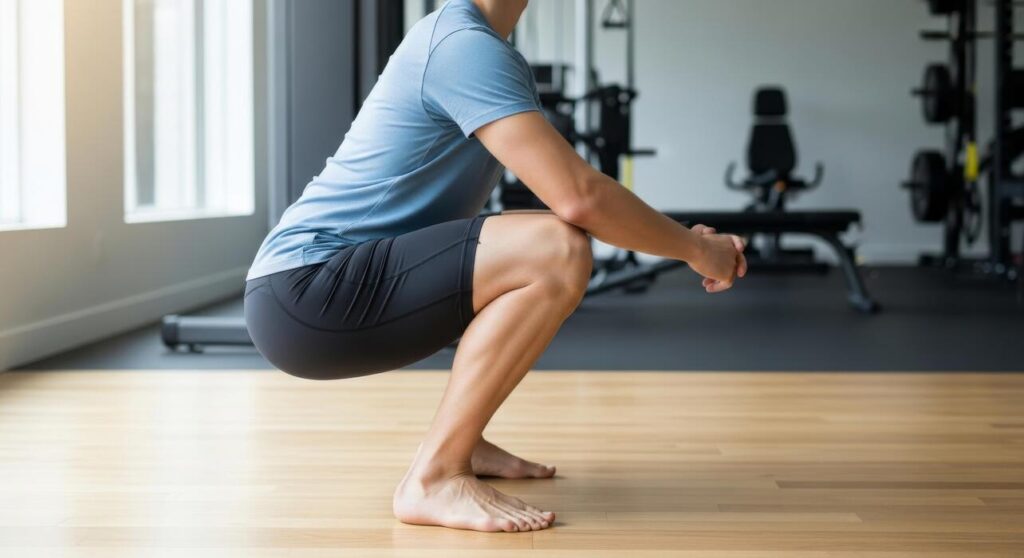
Quick Answer: “Your hip may hurt when you squat or lunge because of limited hip mobility, weak glutes, poor control, irritated tendons, hip impingement-type symptoms, or using a depth your body is not ready for. Physical therapy can identify the cause and help you rebuild strength, mobility, and pain-free movement.”
Hip pain during squats or lunges can be confusing. You might feel a pinch in the front of the hip, a deep ache on the side, tightness through the groin, or discomfort that only shows up at a certain depth. Sometimes the pain goes away once you warm up. Other times, it gets worse the more you push.
Squats and lunges are not “bad” exercises. They are useful movements for strength, balance, athletic performance, and daily life. But they also require good hip mobility, lower-body strength, trunk control, and the right depth for your current body. When one of those pieces is missing, the hip may become irritated.
If hip pain keeps showing up during lower-body exercise, hip pain physical therapy in Phoenix can help identify the real driver and build a plan that gets you moving better without guessing.
Why does your hip hurt when you squat or lunge?
Your hip may hurt during squats or lunges because the joint, muscles, tendons, or surrounding tissues are being loaded in a way they cannot tolerate yet. The pain is often a sign that your mobility, strength, depth, or movement control needs adjustment.
Common reasons include:
- Limited Hip Mobility
- Weak Glutes Or Hip Stabilizers
- Poor Knee And Hip Control
- Front-Of-Hip Pinching
- Tendon Irritation
- Doing Too Much Volume Too Soon
- Squatting Or Lunging Deeper Than Your Current Capacity
- Poor Warm-Up Or Recovery
The important part is not just where it hurts. It is when it hurts, what movement triggers it, and what changes the pain.
Where do you feel hip pain during squats or lunges?
Where you feel hip pain can give clues about what may be involved. It does not provide a full diagnosis, but it helps narrow down the pattern.
| Pain Location | Common Pattern | What It May Suggest |
| Front Of The Hip | Pinch or block at the bottom of a squat | Limited mobility, hip impingement-type irritation, poor depth control |
| Side Of The Hip | Ache or soreness during lunges or single-leg work | Glute tendon irritation or weak hip stabilizers |
| Groin Area | Deep ache, pinch, or catching sensation | Hip joint irritation, mobility restriction, or adductor strain |
| Back Of The Hip | Deep glute ache or tightness | Hip rotator tension, glute overload, or back/hip compensation |
| Outer Thigh | Tightness or pulling | Hip control issue or tissue irritation from repeated load |
If pain is sharp, catching, locking, or getting worse over time, it is worth getting assessed instead of pushing through.
Why does the front of your hip pinch at the bottom of a squat?
The front of your hip may pinch at the bottom of a squat when your hip runs out of comfortable space or control. This can happen from limited mobility, bony anatomy, poor squat setup, or the hip moving into a position it does not tolerate well.
A front-of-hip pinch is common when:
- Your Stance Is Too Narrow For Your Hip Shape
- Your Squat Depth Exceeds Your Current Mobility
- Your Ankles Are Stiff And Force Compensations
- Your Core Loses Position At The Bottom
- Your Hips Shift Or Tuck Under At End Range
- You Add Load Before You Own The Movement
This does not always mean something is seriously wrong. It often means the exercise needs to be modified while mobility and strength improve.
Useful adjustments may include:
- Trying A Slightly Wider Stance
- Turning The Toes Out Slightly
- Reducing Squat Depth Temporarily
- Using A Box Squat To Control Range
- Improving Ankle And Hip Mobility
- Strengthening Glutes And Core Support
The goal is not to force depth. The goal is to find a pain-free range, build strength there, then gradually expand.
Why does your hip hurt more during lunges than squats?
Your hip may hurt more during lunges because lunges demand more single-leg control, hip stability, balance, and range of motion. A squat shares load between both legs. A lunge asks one hip to control much more of the movement.
Lunges can expose:
- Weak Glute Medius Control
- Poor Pelvic Stability
- Tight Hip Flexors
- Limited Ankle Mobility
- Poor Step Length
- Knee Collapse Or Hip Drop
- Reduced Balance Under Load
If your hip hurts during lunges, try changing the version before giving up completely.
Options include:
- Shorter Step Reverse Lunges
- Split Squats Holding Onto Support
- Step-Ups Instead Of Forward Lunges
- Lower Range Of Motion
- Slower Tempo With Lighter Load
- Bodyweight Only Until Control Improves
Reverse lunges and supported split squats are often more comfortable starting points than forward lunges because they give you more control.
Is hip pain during squats a mobility problem or a strength problem?
Hip pain during squats can be a mobility problem, a strength problem, or both. Mobility determines whether your hip can reach the position. Strength and control determine whether you can handle that position safely under load.
Here is a simple way to think about it:
| If This Happens | It May Be More Mobility-Related | It May Be More Strength/Control-Related |
| Pain appears only at the deep range | Yes | Sometimes |
| Pain improves with stance changes | Yes | Sometimes |
| Hip drops or knee caves during movement | Sometimes | Yes |
| Pain appears as you fatigue | Sometimes | Yes |
| Bodyweight feels okay, load hurts | Sometimes | Yes |
| Stretching helps briefly, but pain returns | Maybe | Often |
Most people need a mix of both. Stretching may help, but if you do not build strength in the new range, the pain may keep returning.
What form of mistakes can make hip pain worse?
Common form mistakes that can worsen hip pain include forcing depth, letting the knee collapse inward, over-arching the back, and using a stance that does not match your hip structure.
Watch for these patterns:
- Forcing A Deep Squat Through A Pinch
- Letting The Knee Collapse Inward
- Shifting Weight To One Side
- Lifting Heels At The Bottom
- Taking A Lunge Step That Is Too Long Or Too Short
- Losing Trunk Control
- Adding Load Before Technique Is Consistent
Form should not be rigid or identical for everyone. Your best squat or lunge may look slightly different from someone else’s because hip structure, ankle mobility, and training history vary.
What should you do if squats or lunges hurt your hip?
If squats or lunges hurt your hip, modify the movement first instead of pushing through pain. You want to keep training in a range your body can tolerate while you address the cause.
Start with these steps:
- Reduce The Range Of Motion
- Lower The Weight
- Slow The Tempo
- Try A Different Stance
- Switch From Forward Lunges To Reverse Lunges
- Use Support For Balance
- Stop If Pain Is Sharp Or Increasing
You can also change the exercise while working on the problem. For example, if lunges hurt, step-ups or bridges may be better temporarily. If deep squats pinch, box squats or goblet squats to a comfortable depth may work better.
For a related lower-body article, read Knee Pain When Squatting: Causes, Solutions, How Physical Therapy Helps. It explains how squat mechanics can affect nearby joints and why movement control matters.
How does physical therapy help hip pain during squats and lunges?
Physical therapy helps by identifying why the hip hurts, then building a plan that improves mobility, strength, and movement tolerance. The goal is not just to avoid painful exercises. The goal is to return to them with better control.
A physical therapy assessment may look at:
- Hip Range Of Motion
- Hip Flexor And Glute Strength
- Single-Leg Control
- Squat And Lunge Mechanics
- Ankle Mobility
- Core And Pelvic Control
- Training Volume And Recovery
- Pain Triggers And Symptom Timing
Treatment may include:
- Hip Mobility Work
- Glute Strengthening
- Core Control Exercises
- Single-Leg Stability Training
- Exercise Modification
- Gradual Return-To-Depth Progression
- Load Management For Gym Or Sport Goals
This is especially helpful if you have already tried stretching, rest, or random exercise swaps, but the pain keeps coming back.
Can you keep training with hip pain?
You can often keep training with hip pain if symptoms are mild, do not worsen during the workout, and do not flare the next day. The key is choosing the right movement version and dosage.
A simple rule:
| Pain Response | What To Do |
| Mild discomfort that stays stable | Modify and monitor |
| Pain that gets sharper with reps | Stop or change the exercise |
| Pain that changes your form | Stop that movement for now |
| Pain worsens the next day | Reduce load, depth, or volume |
| Catching, locking, or giving way | Get assessed |
Pain is feedback. It does not always mean stop forever, but it does mean the plan needs to change.
How can you prevent hip pain from coming back?
You can reduce recurring hip pain by building mobility, strength, and control gradually instead of chasing quick fixes. The hip needs to tolerate the positions and loads you want to use.
Helpful habits include:
- Warm Up With Hip-Specific Movement
- Progress Depth Gradually
- Build Single-Leg Strength
- Strengthen Glutes And Hip Stabilizers
- Improve Ankle Mobility If It Limits Squats
- Avoid Big Jumps In Load Or Volume
- Track Next-Day Symptoms
A good lower-body training plan should make your hips feel more capable over time, not more irritated.
Questions people ask about hip pain during squats and lunges
Why does my hip pinch when I squat deep?
A hip pinch during a deep squat often means your hip is reaching a position it does not tolerate well. It may be related to mobility, stance, depth, anatomy, or control. Reducing depth and adjusting stance can help, but recurring pinching should be assessed.
Should I stop doing squats if my hip hurts?
Not always. You may only need to modify depth, load, stance, or tempo. If pain is sharp, increasing, or changing your form, stop that version and get help finding a better starting point.
Why do lunges hurt my hip more than squats?
Lunges require more single-leg balance and hip stability. If your glutes, hip stabilizers, or trunk control are not keeping up, the hip may feel irritated during lunges, even if squats feel fine.
Can tight hip flexors cause pain during squats?
Yes, tight or irritated hip flexors can contribute to front-of-hip discomfort, especially during deep squats or lunges. However, stretching alone may not solve it if strength and control are also part of the issue.
What exercises can I do instead of lunges?
Depending on your symptoms, you may tolerate step-ups, bridges, supported split squats, box squats, or shorter-range reverse lunges. The best option is the one you can do with control and minimal symptoms.
When should I see a physical therapist for hip pain?
See a physical therapist if hip pain keeps returning, limits your workouts, causes catching or locking, affects walking or stairs, or does not improve after modifying exercises for a couple of weeks.
Get back to squatting and lunging without hip pain
Hip pain during squats or lunges does not mean those exercises are off-limits forever. It usually means your hip needs a better combination of mobility, strength, control, and progression. The right modifications can keep you active while you rebuild what your body needs.
If the pain keeps coming back, do not keep guessing with random stretches or exercise swaps. A clear assessment can show whether the issue is hip mobility, glute strength, single-leg control, ankle limitations, or training load.
To get a plan that fits your goals, reach out through the Contact Us page to schedule an appointment at Movement Redefined. We’ll help you understand what is driving your hip pain and build a path back to stronger, more comfortable movement.