
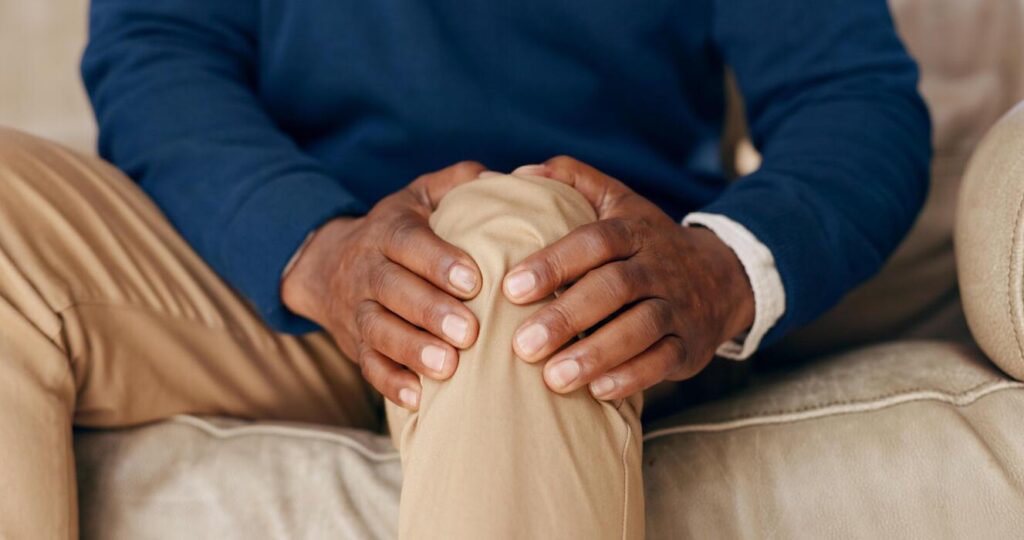
Quick Answer: “Your knee may hurt after sitting for a long time because staying bent increases pressure around the kneecap and allows the joint and surrounding muscles to stiffen. Weakness, kneecap irritation, arthritis, or limited hip and ankle mobility can contribute. Frequent movement and targeted strengthening often help, but recurring pain should be evaluated.”
You finish a long meeting, get out of the car after a drive, or stand up after watching a movie, and your knee feels stiff, achy, or uncomfortable for the first few steps. After you move around, it may loosen up and feel considerably better.
That pattern is common. Sitting keeps the knee bent for a long period, which can increase pressure around the kneecap and reduce movement through the joint. If the knee is already sensitive from training, weakness, arthritis, a previous injury, or another issue, prolonged sitting can make those symptoms more noticeable.
If knee pain after sitting keeps returning or starts affecting normal activity, knee pain physical therapy in Phoenix can help identify what is driving the problem and build a plan around your strength, mobility, and daily demands.
Why does your knee hurt after sitting for a long time?
Your knee can hurt after sitting because the joint stays bent and relatively still for an extended period. That position increases contact around the kneecap while the muscles that normally support the knee are mostly inactive.
When you stand again, your knee suddenly has to manage body weight, straighten fully, and coordinate with the hips and ankles. If the joint or surrounding tissues are irritated, those first few movements may feel stiff or painful.
Common contributors include:
- Kneecap-Related Irritation
- Joint Stiffness
- Quadriceps Weakness
- Hip Weakness
- Arthritis
- Previous Knee Injuries
- Limited Ankle Or Hip Mobility
- Recent Increases In Running Or Training
- Long Periods Without Changing Position
The pain does not necessarily mean sitting is damaging the knee. It may simply expose an underlying problem with load tolerance, mobility, or strength.
The kneecap and prolonged sitting
Pain around or behind the kneecap is one of the most common patterns after prolonged sitting. The kneecap sits within a groove at the front of the knee and experiences pressure as the knee bends.
Keeping the knee bent for a long time can make an already sensitive kneecap area uncomfortable.
You may notice:
- Aching Around The Front Of The Knee
- Discomfort Behind The Kneecap
- Stiffness When First Standing
- Pain After Driving Or Flying
- Discomfort During Movies Or Long Meetings
- Pain During Stairs Or Squats As Well
This type of pain is sometimes called the “movie theater sign” because sitting through a long movie can trigger symptoms.
The solution is usually not simply keeping the knee straight all day. The knee needs to become more comfortable with bending, loading, and transitioning between positions.
Is knee pain after sitting a sign of arthritis?
Knee pain after sitting can occur with arthritis, but prolonged-sitting pain alone does not mean you have arthritis. Kneecap irritation, weakness, tendon problems, previous injuries, and training-related overload can create a similar pattern.
Arthritis-related knee symptoms may also include:
- Morning Stiffness
- Swelling
- Reduced Range Of Motion
- Aching During Weight-Bearing Activity
- Symptoms After Longer Periods Of Inactivity
- Difficulty With Stairs Or Longer Walks
Here is a simple comparison:
| Symptom Pattern | Often Seen With Kneecap Or Load-Related Pain | Can Occur With Arthritis |
| Pain after sitting with knee bent | Yes | Yes |
| Pain on stairs or squats | Common | Common |
| Morning stiffness | Sometimes | Common |
| Swelling | Less common | Can be common |
| Pain after training increases | Common | Possible |
| Reduced joint motion | Sometimes | More common |
| Symptoms improve after moving | Common | Common |
Because the patterns overlap, symptoms alone cannot confirm the cause. An evaluation becomes more useful when pain is persistent, worsening, or limiting daily activity.
Why do the first few steps hurt?
The first few steps after sitting can hurt because the knee has been still and bent, then suddenly has to straighten and support your body weight. The surrounding muscles also need a moment to start contributing again.
That transition can feel uncomfortable when:
- The Joint Is Stiff
- The Quadriceps Are Weak
- The Kneecap Area Is Sensitive
- The Knee Is Swollen
- You Have Been Sitting For Several Hours
- The Hips And Ankles Are Not Moving Well
Some people describe the knee as needing to “warm up.” After a few steps, circulation increases, the joint moves through a larger range, and the surrounding muscles begin working again.
Pain that consistently improves with movement is still worth addressing if it happens every day. Recurring stiffness can be a sign that the knee needs more strength, mobility, or better management of daily load.
Long periods at a desk, in a car, or on a plane
Knee pain after sitting is not limited to office work. Any situation that keeps the knee bent for a long time can trigger symptoms.
Common examples include:
- Long Work Meetings
- Desk-Based Jobs
- Driving
- Flights
- Movies
- Gaming
- Long Meals
- Studying
Car seats and airplane seats can be especially uncomfortable because space is limited and the knee may remain deeply bent.
If you know you will be sitting for a long time, simple movement breaks can help.
Try to:
- Stand And Walk Every 30 To 60 Minutes When Possible
- Straighten And Bend The Knee Periodically
- Avoid Keeping One Leg Tucked Under Your Body
- Change Sitting Position Occasionally
- Take Walking Breaks During Long Drives
- Move Your Ankles And Feet During Flights
The goal is not perfect posture. It is avoiding hours in one unchanging position.
The role of quadriceps and hip strength
Strong quadriceps and hips help the knee manage everyday movement. When those muscles lack strength or endurance, more stress can concentrate around the knee.
The quadriceps help control:
- Standing Up From A Chair
- Walking Down Stairs
- Squatting
- Running
- Lowering Your Body Under Control
The hips help maintain the position of the thigh and knee during movement. Weak hip control can allow the knee to move inward during stairs, squats, or single-leg tasks.
This is why knee rehabilitation often includes more than knee exercises.
Useful strength categories may include:
- Quadriceps Strengthening
- Glute Strengthening
- Calf Strengthening
- Single-Leg Control
- Core And Pelvic Stability
Improving strength gives the knee more support when you transition from sitting to standing and during the activities that follow.
What can you do when your knee gets stiff after sitting?
Start with frequent movement and gentle loading rather than waiting until the knee becomes extremely stiff.
Useful habits include:
- Stand Up Regularly During The Day
- Take Short Walking Breaks
- Straighten The Knee Periodically While Sitting
- Perform Gentle Knee Bends Before Standing
- Avoid Staying In Deeply Bent Positions For Hours
- Build Lower-Body Strength Consistently
When standing after a long period, give yourself a moment before walking quickly. Straighten the knee, shift your weight, and take the first few steps comfortably.
If a specific chair or car position consistently triggers symptoms, adjust it when possible. A slightly different seat height or more room for the legs may reduce how deeply the knee stays bent.
What exercises can help knee pain after sitting?
Exercises that strengthen the quadriceps, hips, and surrounding muscles can improve how the knee handles sitting-to-standing transitions and everyday activity.
Depending on your current tolerance, useful exercises may include:
- Sit-To-Stand Exercises
- Mini Squats
- Bridges
- Straight-Leg Raises
- Step-Ups
- Calf Raises
- Supported Split Squats
- Controlled Step-Downs
The exercise should be challenging enough to build strength without causing a major increase in symptoms afterward.
Start with a comfortable range of motion. You do not need to force deep squats or lunges when the knee is irritated.
The next-day response is useful feedback. If the knee is significantly more painful or swollen the following day, reduce the load, repetitions, or depth and rebuild more gradually.
When stairs and sitting both hurt
Knee pain after sitting often appears alongside pain on stairs because both activities increase demand around the kneecap and quadriceps.
Sitting keeps the knee flexed for a prolonged period. Stair descent then requires the quadriceps to control body weight as the knee bends.
If both activities are uncomfortable, the knee may need better load tolerance and lower-body strength.
Our related guide on why your knee hurts when going down stairs explains why descending can expose quadriceps weakness, hip-control problems, and kneecap sensitivity.
Training mistakes that can make sitting pain worse
Pain after sitting may become more noticeable when the knee is already irritated from exercise or activity.
Common triggers include:
- Increasing Running Mileage Too Quickly
- Adding Hills Or Speed Work Suddenly
- Doing Too Many Deep Squats
- Increasing Leg Training Volume Too Fast
- Returning To Exercise After A Long Break
- Playing Several Games Or Matches In One Weekend
- Ignoring Next-Day Knee Soreness
You may tolerate the workout itself but notice the knee aching later when you sit at your desk or get into the car.
That delayed response is useful information. It may mean your current training volume exceeds the knee’s present capacity.
Reducing the biggest aggravating factor temporarily while maintaining reasonable movement is often more useful than stopping all activity.
When should knee pain after sitting be evaluated?
Consider getting the knee evaluated when pain is recurring, worsening, or affecting more than the first few steps after sitting.
Physical therapy may be helpful when:
- Pain Has Continued For More Than A Couple Of Weeks
- Symptoms Occur Every Day
- Pain Is Affecting Stairs, Walking, Or Exercise
- The Knee Feels Unstable
- Swelling Keeps Returning
- Range Of Motion Is Decreasing
- You Are Avoiding Normal Activities
- Basic Movement Breaks, And Strength Work Are Not Helping
Seek medical attention sooner if the knee locks, becomes severely swollen, cannot bear weight, or was injured during a significant fall, collision, or twisting event.
How physical therapy addresses knee pain after sitting
Physical therapy looks beyond the symptom of stiffness and examines why the knee is having trouble tolerating prolonged sitting and the movements that follow.
An evaluation may assess:
- Knee Range Of Motion
- Quadriceps Strength
- Hip Strength
- Ankle Mobility
- Swelling
- Kneecap Sensitivity
- Squat And Step Mechanics
- Sitting And Work Habits
- Running Or Training Load
- Previous Knee Injuries
Treatment depends on what is found.
A plan may include progressive strengthening, mobility exercises, movement retraining, activity modification, and gradual return to running, lifting, hiking, or other activities.
The goal is to make the knee more capable, not simply to find a sitting position that never hurts.
Questions people ask about knee pain after sitting
Why does my knee hurt when I stand up after sitting?
Your knee may hurt when you stand because it has been held in a bent position and suddenly has to straighten and support your body weight. Kneecap sensitivity, stiffness, weakness, or joint irritation can make that transition uncomfortable.
Why does my knee loosen up after I start walking?
Movement helps the joint move through its available range while activating the muscles around the knee. This can reduce the feeling of stiffness after prolonged inactivity.
Can sitting too long damage my knees?
Sitting itself does not usually damage a healthy knee. However, prolonged bending can increase discomfort when the knee is already sensitive from arthritis, kneecap irritation, weakness, injury, or training overload.
Why does my knee hurt after driving?
Driving keeps the knee bent for a long period and may provide little opportunity to change position. Long drives can make an already sensitive knee feel stiff or painful when you get out of the car.
Should I keep my knee straight when sitting?
You do not need to keep it straight constantly. Changing positions is more practical. Periodically straightening the knee and taking movement breaks can help reduce stiffness during long periods of sitting.
When should I see a physical therapist for knee pain after sitting?
Consider physical therapy if the pain keeps returning, affects stairs or exercise, causes swelling or instability, or does not improve after a few weeks of reasonable movement and strength changes.
Make sitting and standing comfortable again
Knee pain after sitting for a long time is often related to prolonged joint position, kneecap sensitivity, stiffness, or a lack of strength around the knee and hips. Standing up exposes the problem because the knee suddenly has to move and accept load again.
Frequent movement breaks can reduce stiffness, but lasting improvement often comes from increasing the knee’s ability to tolerate everyday activity. Strength, mobility, workload management, and better movement habits can all play a role.
If knee pain keeps showing up after work, driving, travel, or other long periods of sitting, use the Movement Redefined contact page to schedule an appointment. The team can help identify what is driving your symptoms and build a plan for more comfortable movement throughout the day.