
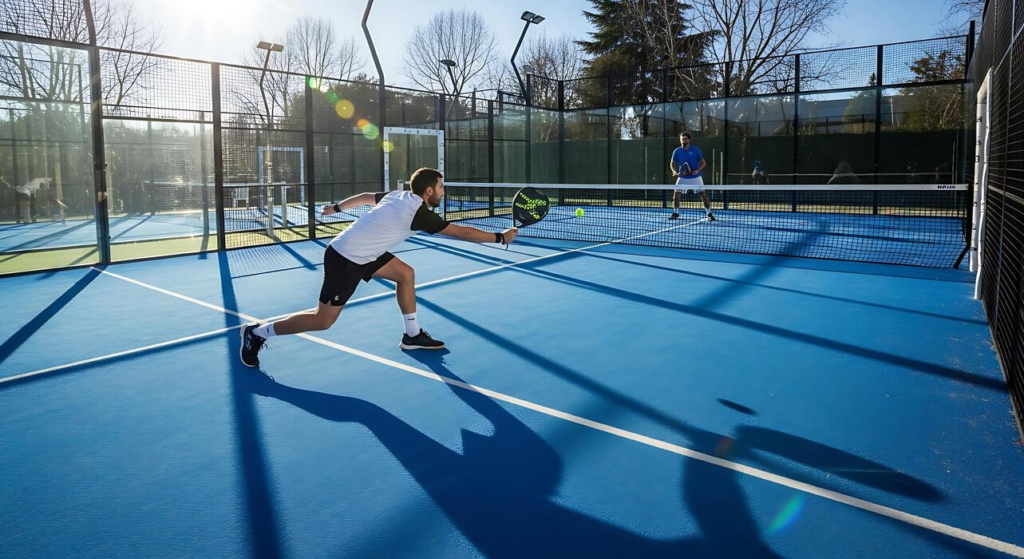
Pickleball is easy to start and hard to stop playing. The quick reactions, repetitive swings, and fast direction changes can also irritate the shoulder and elbow, especially if you ramp up too quickly or play through early warning signs.
If you’re dealing with shoulder soreness after serves, a sharp pinch when you reach overhead, or elbow pain that lingers after a game, the goal is not just to “rest until it goes away.” The real goal is to understand what’s driving the pain, fix it, and return to the court with better mechanics, stronger support, and less risk of it coming back.
If you want a clear plan, sports-related injury physical therapy at Movement Redefined is designed to help active adults get back to the activities they enjoy, including pickleball.
Why does pickleball commonly irritate the shoulder and elbow
Pickleball loads the upper body in a specific way: Lots of short, fast swings with repeated gripping, rapid wrist motion, and quick shoulder positioning. Even if the sport feels “low impact,” the volume adds up fast.
Common reasons pain shows up include:
- Repetitive Swinging Plus “New Sport Volume”: Many people go from little overhead or racket-style activity to playing multiple days per week. Tendons and supporting muscles need time to adapt. When the workload rises faster than tissue capacity, irritation follows.
- Small Technique Leaks That Add Big Stress: A slightly late contact point, swinging mostly with the arm instead of rotating from the trunk, or “arming” your serve, can shift stress into the shoulder and elbow.
- Grip and Wrist Overuse: Over-gripping the paddle and using a lot of wrist flick can overload the forearm tendons. That’s a common setup for outside-elbow pain.
- Limited Shoulder Mobility or Weak Shoulder Blade Control: When the shoulder does not move well, or the shoulder blade is not stable, the body borrows motion from places that are not built for it. That often means more strain at the front of the shoulder, biceps tendon area, or rotator cuff.
- The Chain Reaction From Hips And Core: Pickleball is not only an arm sport. If hip and trunk rotation are limited or weak, you compensate with more shoulder and elbow work to generate power.
Common pickleball-related shoulder issues
Not every ache is the same. Where it hurts, when it hurts, and what movements trigger it can point you toward the right fix.
Rotator cuff irritation
The rotator cuff helps stabilize the shoulder during swings and overhead motion. Pain often shows up with serves, high volleys, reaching overhead, or lifting the arm away from the body.
Shoulder impingement-type symptoms
This often feels like a pinch at the front or side of the shoulder during overhead reaching or certain swing angles. It can be linked to posture, shoulder blade positioning, and mobility restrictions.
Biceps tendon irritation
Pain at the front of the shoulder that increases with lifting, reaching, or repetitive swings can involve the long head of the biceps tendon. It often responds well to a plan that improves shoulder mechanics and strength in the right ranges.
Clicking or catching sensations
Clicking does not automatically mean damage, but clicking plus pain, weakness, or loss of motion is worth assessing. If you want more context on when clicking matters, see Why Does My Shoulder Click? Shoulder Clicking/When to Worry.
Common pickleball-related elbow issues
Elbow pain is often driven by tendon overload and gripping mechanics.
Tennis elbow (lateral epicondylitis)
Despite the name, it’s extremely common in pickleball. It usually feels like pain on the outside of the elbow, worse with gripping, lifting, backhands, or even shaking hands.
Golfer’s elbow (medial epicondylitis)
Pain on the inside of the elbow, often aggravated by wrist flexion, forehand strokes, or heavy gripping.
Forearm muscle overload
Sometimes the pain is more muscular and diffuse through the forearm. That still matters because it can become tendon irritation if you keep stacking volume without changing the driver.
When “just rest” is not enough
Rest can calm symptoms temporarily, but it does not always solve the root cause. Many players feel better, return to the court, and flare again because nothing changed.
Physical therapy is a strong next step when:
- Pain lasts longer than 1 to 2 weeks despite reducing play
- You keep getting the same flare-up pattern
- You feel weakness, loss of range of motion, or pain with daily tasks (Reaching, lifting, opening jars)
- Pain is sharp, increasing, or limits your ability to play normally
- You are changing your swing to avoid pain (This often creates new problems)
Red flags where you should get evaluated quickly:
- Sudden severe pain with a pop, major bruising, or obvious deformity
- Numbness or tingling, or significant radiating symptoms
- Rapid loss of strength or inability to raise the arm
How physical therapy helps pickleball players return faster and safer
The best PT plan does not just reduce pain. It rebuilds the capacity you need for pickleball.
Step 1: Identify the true driver
A good evaluation looks at:
- Shoulder mobility and stability
- Shoulder blade mechanics
- Wrist and forearm strength
- Grip strategy and tendon sensitivity
- Thoracic (Upper back) mobility
- Core and hip contribution to rotation and power
Often, the painful spot is not the only problem. It’s the place that is taking the hit.
Step 2: Calm the irritated tissues
Early treatment may include hands-on work, mobility drills, and load-modification strategies so you can stay active without continually provoking the injury.
Step 3: Rebuild strength in the right patterns
For shoulder and elbow issues, strength is specific. That usually means:
- Rotator cuff endurance and control
- Scapular stabilizers (Mid-back, lower trap, serratus)
- Forearm tendon loading progression
- Grip strength without over-gripping
- Trunk rotation and deceleration control
If your pain is centered in the shoulder, a focused plan like shoulder pain physical therapy can be the most direct route back to pain-free play.
Step 4: Fix the return-to-play gap
Many people stop rehab once the pain drops. Pickleball requires repeated, fast reps under fatigue. A return-to-play plan gradually rebuilds:
- Swing tolerance
- Overhead tolerance
- Gripping tolerance
- Quick reaction movements
That is how you return with confidence, not just hope.
What you can do right now to reduce pickleball shoulder and elbow pain
These are general, safe starting points. If anything spikes pain, stop and get assessed.
1) Modify play instead of quitting completely
Try:
- Shorter sessions
- Fewer days per week temporarily
- Avoiding the most aggravating shot (Often repeated overheads or hard backhands)
- Focusing on clean contact rather than power
2) Check your grip pressure
Most players grip too hard. A slightly lighter grip can reduce forearm tendon load. You still need control, but you do not need a death grip.
3) Warm up like an athlete
A short warm-up can make a real difference:
- Gentle shoulder circles
- Light band external rotations (If tolerated)
- A few minutes of easy groundstrokes and volleys before hard play
- Forearm and wrist mobility
4) Respect next-day pain
If you feel fine during play but ache hard the next day, that is a sign you exceeded your current capacity. That does not mean stop forever. It means adjust and progress.
5) Do not ignore sleep and recovery
Tendon and muscle adaptation are tied to recovery. If you are undersleeping and over-playing, irritation tends to stick around longer.
What to expect at Movement Redefined for pickleball-related pain
A pickleball-focused plan typically includes:
- A movement assessment that connects your symptoms to mechanics
- A clear home plan (Simple, not overwhelming)
- Progressive strengthening and mobility work
- Guidance on what to change in play while you heal
- A timeline based on your starting point and goals
Most importantly, the plan should make sense to you. You should know what you are doing, why you are doing it, and what “better” looks like week to week.
FAQs about pickleball shoulder and elbow pain
Is pickleball elbow the same as tennis elbow?
Often, yes. The mechanism is similar: Repetitive gripping and wrist motion overload the tendon on the outside of the elbow. The fix is usually a combination of load management, progressive tendon strengthening, and technique tweaks.
Should I stop playing pickleball if my shoulder hurts?
Not always. Many people can keep playing with smart modifications, but playing through sharp pain or steadily worsening symptoms is rarely a good strategy. If pain persists beyond 1 to 2 weeks, get assessed so you do not turn a small irritation into a long layoff.
How long does it take to recover from pickleball-related tendon pain?
It depends on how long you have had it, how sensitive it is, and how consistently you follow a progressive plan. Mild cases can improve in a few weeks. Longer-standing tendon issues often need a longer build phase. The key is consistency and the right progression.
What’s the fastest way to reduce elbow pain from pickleball?
The fastest safe route is: Reduce aggravating volume, improve grip strategy, and start a progressive strengthening plan for the forearm tendons. Passive rest alone is often slower.
What should I bring to my first appointment?
Bring a list of your symptoms, what shots or activities trigger pain, and what you’ve already tried. If you have imaging or medical notes, those can help, but they are not required to start.
Conclusion
Pickleball shoulder and elbow pain is common, but it is not something you have to accept as “part of the sport.” In most cases, pain is a signal that your current mechanics, mobility, and tissue capacity are out of sync with how often and how hard you’re playing. Stretching alone may feel good, but lasting relief usually comes from the right mix of mobility, strength, and a smarter progression back to full play.
If you want a clear, personalized plan, reach out through the Contact Us page to schedule an appointment at Movement Redefined. We’ll help you reduce pain, rebuild the right strengths, and return to the court feeling confident and in control.