
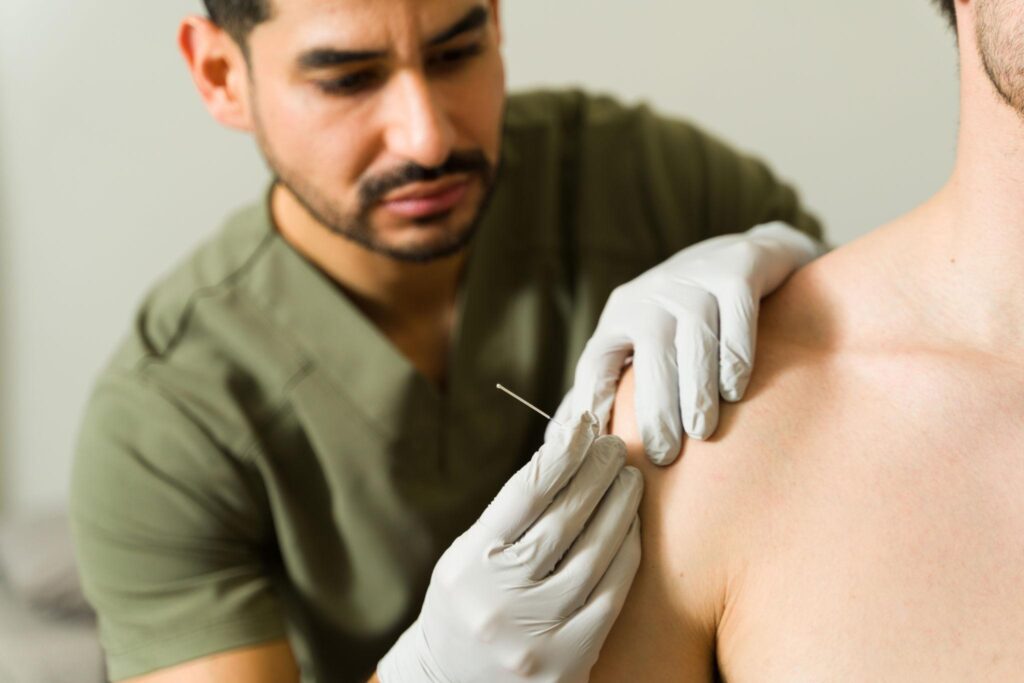
Quick Answer: “Dry needling may cause a brief prick, muscle twitch, or cramping sensation, but discomfort is usually temporary. Some people experience mild soreness, stiffness, or bruising afterward, often improving within 24–48 hours. The experience varies by treatment area and sensitivity. A qualified physical therapist can explain what to expect and recommend appropriate aftercare.”
Trying a treatment involving needles can feel intimidating, particularly when you are unsure how much it will hurt or what your body will feel like afterward.
Dry needling uses very thin, sterile needles inserted into targeted muscle tissue. Unlike injections, the needles do not deliver medication. The treatment is sometimes used by physical therapists to address muscle pain, tightness, and movement limitations as part of a broader rehabilitation plan.
Some people barely notice the needle entering the skin. Others feel a deep ache or a quick muscle twitch. Understanding these sensations, the possible side effects, and the recovery process can make the decision easier.
At Movement Redefined, dry needling therapy in Phoenix is one of the treatment options available for patients dealing with muscle discomfort and movement limitations.
Does dry needling actually hurt?
Dry needling can cause discomfort, but the sensation varies significantly between people and treatment areas.
The needles used are much thinner than the needles commonly used for injections or blood tests. Some patients feel very little when the needle enters the skin.
Others notice:
- A Brief Pinching Sensation
- A Dull Ache Within The Muscle
- A Quick Muscle Twitch
- A Short Cramping Sensation
- Temporary Pressure Around The Treatment Area
- Mild Tenderness Afterward
The treatment should not involve forcing you to tolerate severe or escalating pain.
Tell your provider when a sensation feels unusually sharp, intense, or uncomfortable. Your therapist can reassess the response and adjust or stop the technique when appropriate.
What does dry needling feel like during treatment?
The sensation depends on whether the needle passes through the skin, reaches sensitive muscle tissue, or stimulates a trigger point.
A typical session may involve several distinct sensations.
Needle insertion
You may feel a brief prick when the needle enters the skin.
Some people barely notice this step because the needle is extremely fine.
A deep muscle ache
When the needle reaches a sensitive area of muscle, you may notice a dull ache or pressure.
This sensation is different from the sharp feeling associated with a typical injection.
A muscle twitch
A local twitch response is a brief, involuntary contraction of the muscle.
It may feel like a quick jump or small cramp before the muscle relaxes.
A twitch is not necessary for every treatment, and its presence does not guarantee a better result.
Tenderness after needle removal
The treated muscle may feel slightly tender once the needle is removed.
For some people, it resembles the soreness experienced after an unfamiliar workout.
Why can muscles twitch during dry needling?
A muscle twitch can occur when the needle stimulates a sensitive area within the muscle.
These areas are often called trigger points. They may be associated with tenderness, muscle tightness, and pain during movement.
When the needle interacts with muscle and nerve tissue, it can sometimes produce a brief involuntary contraction.
The response may feel surprising, especially during a first session, but it usually ends quickly.
Not every treated muscle twitches, and a noticeable twitch should not be treated as proof that the technique will work.
The more meaningful outcomes are whether pain, movement, and daily function improve over time.
How long does soreness last after dry needling?
Post-treatment soreness commonly improves within 24–48 hours, although the duration varies.
Some people experience little or no soreness. Others notice tenderness for a day or two, particularly when several sensitive areas were treated.
The following comparison can help distinguish common reactions from symptoms that need attention.
| After-Treatment Symptom | What You Might Notice | Recommended Response |
| Mild Muscle Soreness | Tenderness similar to exercise soreness | Gentle movement and monitoring |
| Temporary Stiffness | Muscle feels tight after treatment | Comfortable mobility exercises |
| Small Bruise | Localized discoloration near needle site | Monitor as it resolves |
| Brief Lightheadedness | Dizziness shortly after treatment | Sit down and inform the provider |
| Severe Or Increasing Pain | Pain significantly worse than expected | Contact your healthcare provider |
| Chest Pain Or Breathing Difficulty | New symptoms after treatment near the chest or upper back | Seek emergency medical care |
Most mild reactions resolve without additional treatment.
However, worsening symptoms or unusual reactions should never be dismissed as simply part of the process.
What should you do after dry needling?
Aftercare usually focuses on keeping the treated area comfortable and allowing your body to respond to the procedure.
Your therapist’s instructions should take priority because recommendations may differ depending on the treatment area and your overall rehabilitation plan.
General aftercare strategies include:
- Continue Gentle Movement As Tolerated
- Stay Normally Hydrated
- Avoid Aggressively Stretching A Painful Area
- Monitor Soreness And Bruising
- Modify Intense Exercise When The Muscle Feels Irritated
- Follow Any Specific Instructions From Your Therapist
You do not necessarily need bed rest after dry needling.
Comfortable movement can help prevent the treated area from becoming unnecessarily stiff.
Can you exercise after dry needling?
Many people can resume normal daily activities after dry needling, but intense training may need to be adjusted if the treated muscle feels sore.
The right approach depends on the muscle treated, your activity goals, and how you respond.
Light activity
Walking and gentle movement are often comfortable after treatment.
These activities may help you assess how the treated area feels without placing excessive demands on it.
Strength training
Strength training may be appropriate when the muscle is not significantly sore and your therapist has not advised otherwise.
You may need to reduce resistance, repetitions, or exercise intensity temporarily.
Running and sports
Athletes should pay attention to how the treated muscle responds during movement.
A muscle involved in sprinting, jumping, throwing, or rapid direction changes may need additional recovery time before high-intensity activity.
Stretching
Gentle stretching may feel comfortable, but forcing a sore muscle into a deep stretch is unnecessary.
More stretching does not automatically create better results.
Is bruising normal after dry needling?
Small bruises can occur because the needle may contact tiny blood vessels beneath the skin.
Bruising is generally localized and may take several days to resolve.
The likelihood of bruising can vary depending on the treatment area and individual factors.
Tell your provider before treatment if you:
- Take Blood-Thinning Medication
- Have A Bleeding Disorder
- Bruise Easily
- Have Experienced Unusual Bleeding After Previous Procedures
- Have Other Medical Conditions Affecting Treatment Safety
Your provider can determine whether precautions or a different treatment approach are appropriate.
Significant swelling, uncontrolled bleeding, or rapidly worsening symptoms require medical attention.
Dry needling safety and possible side effects
Dry needling is generally considered a low-risk procedure when performed by an appropriately trained clinician using suitable precautions. However, no procedure involving skin penetration is completely risk-free.
Possible side effects include:
- Temporary Muscle Soreness
- Minor Bleeding
- Bruising
- Lightheadedness
- Fainting
- Localized Irritation
Less common but more serious complications include infection, nerve injury, or injury to structures beneath the treatment area.
Needling near the chest or upper back carries a rare risk of pneumothorax, also known as a collapsed lung.
New chest pain, shortness of breath, or difficulty breathing after treatment requires emergency medical evaluation.
A qualified provider should explain relevant risks, review your health history, obtain informed consent, and use appropriate sterile technique.
Is dry needling the same as acupuncture?
Dry needling and acupuncture both use thin needles, but they are generally performed within different treatment frameworks.
Dry needling is commonly used in musculoskeletal rehabilitation to address muscle-related pain and movement limitations.
Acupuncture is traditionally based on a different system of assessment and treatment, although some contemporary techniques overlap.
Both approaches involve needle insertion, and neither should be described as universally better.
The appropriate choice depends on your condition, preferences, treatment goals, and provider qualifications.
How does dry needling fit into physical therapy?
Dry needling is generally best understood as one possible component of physical therapy rather than a complete rehabilitation program.
A physical therapist may also address:
- Muscle Strength
- Joint Mobility
- Movement Control
- Exercise Tolerance
- Posture And Work Demands
- Sports-Related Loading
- Previous Injuries
- Daily Activity Limitations
For example, a patient with recurring shoulder tightness may experience temporary symptom relief from dry needling, but strengthening and movement retraining may still be needed to improve long-term function.
The treatment is not appropriate for every patient, and the research on effectiveness varies by condition.
For more background on its purpose and potential benefits, read Discover the Benefits of Dry Needling at Movement Redefined.
How many dry needling sessions will you need?
The number of sessions depends on your condition, symptoms, overall treatment plan, and response to care.
Some people notice changes in discomfort or movement after an early session. Others require additional treatment or may not experience meaningful improvement.
There is no reliable universal number of sessions that guarantees pain relief.
Your therapist should assess progress using practical measures such as:
- Pain During Daily Activities
- Range Of Motion
- Muscle Tenderness
- Exercise Tolerance
- Ability To Return To Work Or Sport
- Changes In Functional Movement
Continued treatment should be guided by whether it is helping you achieve useful improvements.
Who should discuss precautions before dry needling?
Dry needling is not suitable for everyone.
Before treatment, tell your clinician about relevant medical conditions, medications, and concerns.
Additional precautions or alternative care may be needed for people who:
- Are Pregnant
- Have Bleeding Disorders
- Take Anticoagulant Medication
- Have An Active Skin Infection Near The Treatment Area
- Have Certain Immune System Conditions
- Have A Significant Fear Of Needles
- Have Previously Experienced Fainting During Needle Procedures
These factors do not all automatically rule out treatment. They help the clinician determine whether dry needling is appropriate and what precautions are necessary.
Questions people ask about dry needling
Does dry needling hurt more than acupuncture?
Pain experiences vary with both treatments. Dry needling may produce a stronger muscle twitch or deep ache when targeting sensitive muscle tissue. Neither treatment is necessarily more painful for everyone.
Is it normal to feel sore the day after dry needling?
Yes. Mild muscle soreness is a common response and often settles within 24–48 hours. Significant or worsening pain should be discussed with your provider.
Can dry needling make muscle pain worse?
Temporary soreness can occur after treatment. Persistent or substantial worsening is not something to ignore. Contact your healthcare provider to determine whether the reaction needs assessment.
Should you rest after dry needling?
Complete rest is usually unnecessary unless your provider recommends it. Gentle movement is often appropriate, while intense exercise may need modification if the treated muscle is sore.
Is dry needling safe for the neck and shoulders?
Dry needling may be performed in these areas by appropriately trained clinicians, but treatment near the chest and upper back requires particular attention to anatomy and safety. Serious complications are uncommon but possible.
How quickly does dry needling work?
Some people notice an improvement shortly after treatment, while others experience gradual changes or no meaningful benefit. Results depend on the condition, treatment approach, and the broader rehabilitation plan.
Feel more prepared for your first dry needling session
Dry needling can involve a brief prick, muscle ache, or twitch, but the discomfort is generally temporary. Mild soreness or bruising afterward is possible and often improves within a day or two.
Understanding these reactions helps you approach treatment with realistic expectations rather than uncertainty. Dry needling may support pain management and mobility for selected patients, but it works best when considered alongside an appropriate rehabilitation plan.
If you are considering treatment for recurring muscle pain or tightness, contact Movement Redefined in Phoenix to discuss your symptoms and schedule an appointment. Our team can help determine whether dry needling or another physical therapy approach fits your needs.